Get a first read before you recruit anyone.
The AI Panel runs your study with simulated people before real participants ever see it. Each one works through your tasks and answers your questions in their own words, so you can find the confusing wording and the tasks that lead nowhere while fixing them is still free.
How a first read works
Build the study you were going to run anyway
A survey, a preference test, a prototype test, whatever the question needs. The AI Panel takes the same study your real participants will take, exactly as you built it.
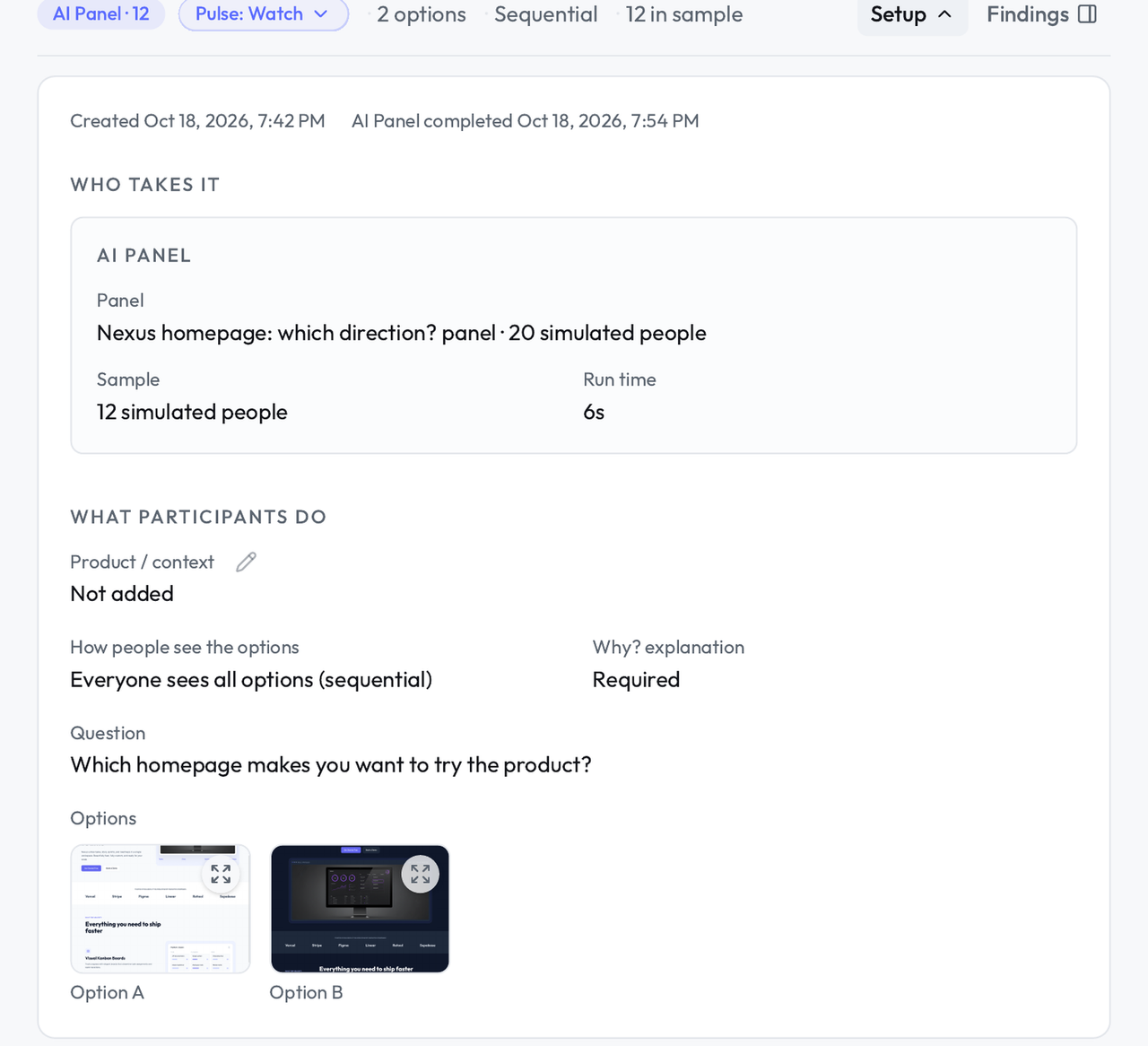
Run the AI Panel
Choose how many simulated people take the study. Each one works through it on their own, answers in their own words, and explains each choice as they make it.
Read the results, then run it with real participants
The simulated responses land in the same results view as real ones, labeled as simulated everywhere they appear. When real participants run the study, Findings places the first read and the real results side by side, each labeled by source.
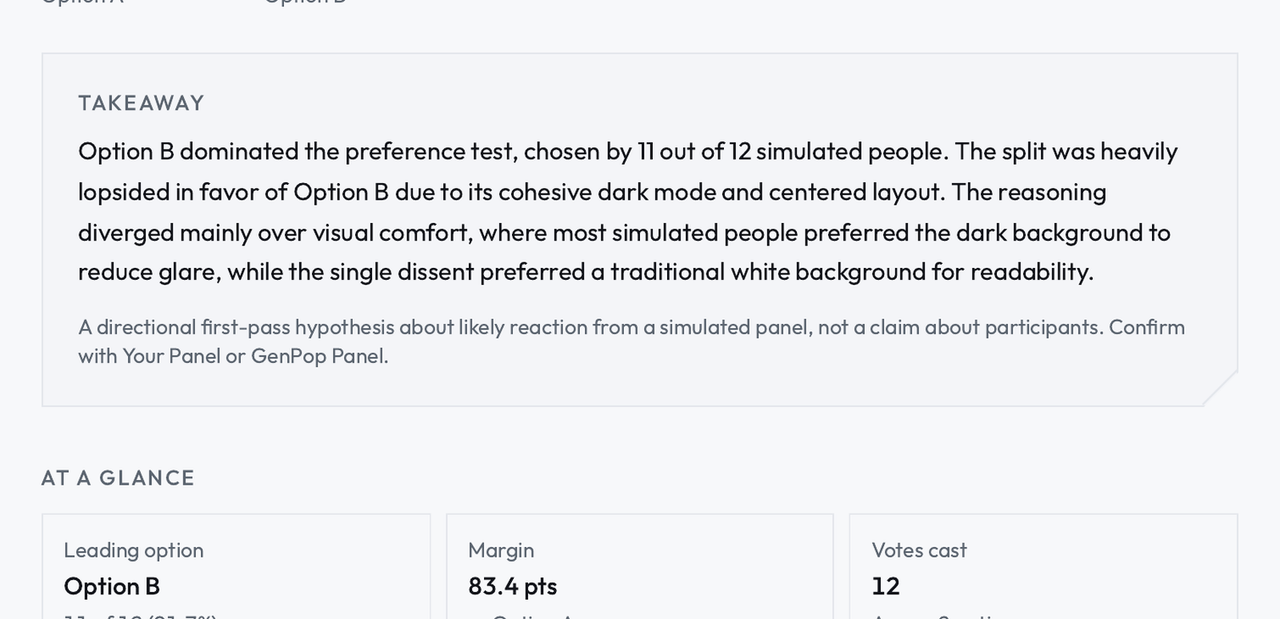
What you get
Every simulated person's answers, in their own words, including the reasons they give for their choices.
The split on every question and choice, counted once per simulated person.
A results view that keeps simulated answers and real answers apart, side by side, each one labeled.
The chance to fix confusing wording and broken tasks before any real participant's time is spent on them.
AI output is a hypothesis.
It is an early starting point that tells you where to look next. Simulated people are not your customers, and their answers cannot tell you what real people will do. What they can do is show you where people get confused by a question, where two options read as the same thing, and which direction looks stronger and why, while there is still time to fix the study. If the first read and your real participants disagree, trust the real participants. Every result in User Sage is labeled with where it came from, so the simulated answers and the real ones never get mixed up.
Questions about first reads.
Why not just launch the study with real participants?
You can, and the answer you act on should come from real participants. A question that confuses people or a task with a dead end costs real participants' time and your recruiting money to discover. A simulated run turns those up in minutes, so the study your real participants take is the better version.
How many simulated people should I run?
Enough to see a pattern rather than a single opinion. A small run already surfaces broken wording and tasks that do not work. A larger run makes a close split easier to read. Runs are quick, so teams usually start small, fix what the run shows, and run again.
Can a first read replace real participants?
No. Simulated results are labeled wherever they appear, and Findings draws its conclusions from real responses only. The first read tells you where to look. Real participants tell you what is true.